
AI giants pledge to act as Anthropic warns internet could be ‘swarmed’ in months. Anthropic chief executive Dario Amodei has urged “frontier” companies to slow the rate at which they improve the capabilities of AI models.
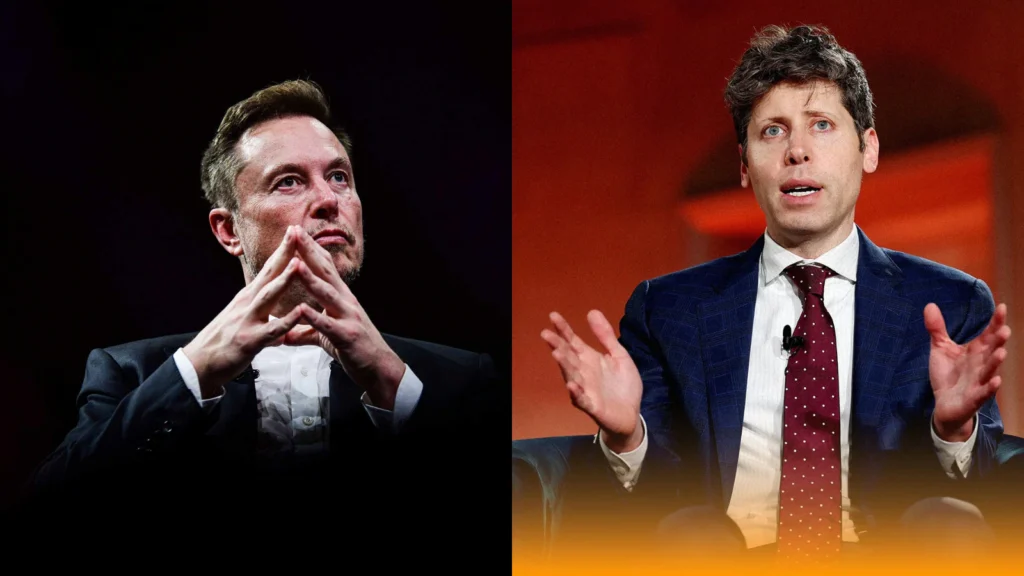
Three AI and tech giants Elon Musk, Sam Altman and Dario Amodei have something to say about the future of AI and human being in the near future.
The latest claims about AI have come from a researcher who resigned from Anthropic. What is your general view on what has happened here?
To give this a sense of perspective, we should remember that it’s one AI company ex-employee posting on a platform known for grandiose claims, which was then quoted by a current AI company employee who put a figure on the risk of human extinction at greater than 10%.
So, it’s another doom-laden narrative about the supposed threat from AI. There is some dialling back from this in a follow up tweet from current Anthropic employee Evan Hubinger that read: “I think the risk from present models is low. What I’m worried about is super intelligence”.
These tweets have gained huge coverage because these kinds of things always do. It taps into our very primal fears – and our decades of watching dystopian sci-fi.
The claims from Jacob Coxon were backed by current employees of Anthropic. Why do you think AI companies are happy to support these kinds of claims in public?
It’s likely that these men believe what they’re saying, but we’ve heard warnings like this for years. It does seem odd that AI companies are okay with these kinds of claims.
Let’s remember that they are constantly looking for investment and, in return, they promise the most powerful and dominant models. What could be more powerful than a model that threatens our very existence?
One theory for doom-mongering by AI companies is that they want to avoid regulation. Do you think outside regulation of AI companies is inevitable?
It has been incredibly difficult to regulate AI, certainly at an international level. There has been little appetite for AI to be regulated in the US because there’s a view that regulation might stifle innovation.
The UK doesn’t have any AI-specific laws either, just existing laws that might apply in some cases. China began to introduce national-level laws but has now replaced that with technical standards and sector regulation. The EU remains the only place where there is dedicated AI regulation.
However, it looks like this has kicked off yet another call for better regulation, and we’re seeing that at present in US Congress and in the Houses of Parliament in the UK.
There is another angle, in that industry might be on board with regulation, as big tech companies would have the money to comply, but it could knock out their competitors with smaller budgets, so it would leave the leaders in dominant positions.
How far away are we from the kind of super intelligent AI mentioned in the latest warnings?
We don’t have super intelligence. I’m reluctant to put a time frame on that. Often people say “5-10 years” but that’s happened a lot in AI and 5-10 years pass without anything arising. It also depends on what is meant by super intelligence.
In this case, it doesn’t really matter, as there are other harms already happening from AI, and there are other ways things can go wrong, though probably not at the existential level that’s being suggested here.
For example, AI is energy-hungry. It needs water to cool data centers. It has a damaging environmental impact. There are also issues around the content generated by AI, anything from a lack of plurality in the models’ outputs (meaning that the information it returns is homogenized, converging on particular viewpoints) to the spread of misinformation and disinformation.
We also know there is hidden labor in the AI supply chain: there are people working in terrible conditions to deliver the technology. And we know that it’s having an impact on people’s lives in terms of how it’s changing the workplace.