

Recent outbreak of the deadly Nipah virus in Indian West Bengal state has sparked concern in the many parts of Asia, with some tightening screening measures at major airports.
Thailand has already started screening passengers at three major airports of the country that receive flights from West Bengal. Nepal has also begun screening arrivals at Kathmandu airport and other land border points with India.

According to India’s health ministry, two cases have been confirmed in West Bengal so far since last December. Reported by some healthcare workers 196 people who were in contact with them have been traced and tested negative for the virus.
This virus can spread from animals to humans and has a high death range which is ranging from 40% to 75%. As there is no vaccine or medicine to treat it.
The Nipah virus can be transmitted from animals, like pigs and fruit bats, to humans. It can also spread from person to another person through contaminated food.
The World Health Organization has described Nipah in its top ten priority diseases, along with pathogens like Covid-19 and Zika, because of its potential to trigger an epidemic.
People who contract the virus show a wide range of symptoms, or sometimes, not at all.
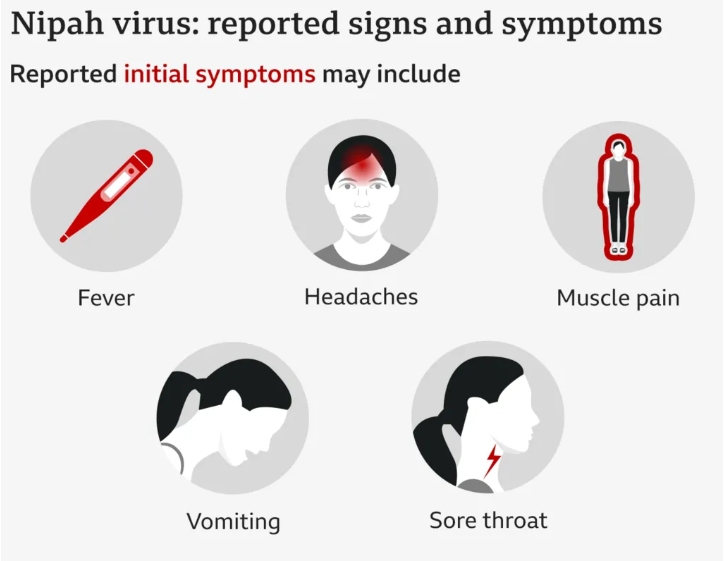
Initial symptoms may include fever, headaches, muscle pain, vomiting and sore throat. In some people, these may be followed by drowsiness, altered consciousness, and pneumonia.
Encephalitis, a sometimes-fatal condition that causes inflammation of the brain, may occur in severe cases. The incubation period ranges from four to 14 days.
The first recognised Nipah outbreak was in 1998 among pig farmers in Malaysia and later spread to neighbouring Singapore. The virus got its name from the village where it was first discovered.

India’s health ministry said that following confirmation of the cases in West Bengal, contacts of the infected individuals were “identified, traced, monitored, and tested” – and had been found to be asymptomatic.